
Newsletter Subscribe
Enter your email address below and subscribe to our newsletter
Enter your email address below and subscribe to our newsletter

 ByJohn A
Contrast therapy means alternating heat and cold on purpose, usually 15 to 20 minutes in an infrared cabin followed by 1 to 3 minutes in cold water, repeated for two or three rounds. The heat side has real cohort evidence behind it for cardiovascular outcomes; the cold side is more mixed, especially for anyone chasing muscle growth. Most home setups do fine with one or two rounds rather than the multi-hour protocols you see online.
The idea is simple: heat dilates blood vessels and raises heart rate the way moderate cardio does, then cold immersion constricts them again, and the body works to re-regulate in between. Athletes have used some version of this for decades, usually a hot tub or steam room followed by an ice bath. Home infrared cabins and plunge tubs have made the same pattern realistic for a spare bathroom or a corner of the backyard, without needing a gym or spa membership.
There is no single official protocol. What shows up most often in practice is two to three cycles of sauna heat followed by a short cold dip, with a few minutes of rest between rounds so the body is not moving from one extreme straight into the other. People who are new to either half of the pairing usually do better easing into both sides before trying to combine them.
Infrared cabins typically run cooler than a traditional steam sauna, often in the 120 to 150 degree Fahrenheit range instead of 170 to 190. That lower ambient temperature is part of the appeal for contrast work, since the heat still raises skin and core temperature without the harsher air a wood or electric traditional unit produces. A 15 to 20 minute infrared session is usually enough to work up a real sweat and get the cardiovascular response researchers have studied, without needing an hour inside.
Session length matters more than chasing a higher number on the thermostat. Sitting at the top of an infrared cabin’s range for longer than recommended does not multiply the benefit, and it raises the odds of feeling lightheaded when you step into cold water right after.
Most home cold plunge setups land somewhere between 50 and 59 degrees Fahrenheit, which is cold enough to trigger a real response without needing ice year-round in most climates. One to three minutes is a common range for a single immersion. Longer is not automatically better here either; the goal is a clear temperature swing, not an endurance test.
Breathing through the first 30 seconds is the hardest part for most beginners. Slow exhales help more than trying to tough it out, and stepping in gradually rather than jumping tends to make the whole experience more sustainable as a repeated habit rather than a one-time dare.
The strongest evidence here is on the heat side. A large Finnish cohort study published in JAMA Internal Medicine found that more frequent sauna bathing was associated with lower fatal cardiovascular and all-cause mortality over roughly two decades of follow-up. A follow-up analysis in Annals of Medicine found that the combination of sauna bathing and cardiorespiratory fitness carried an even stronger association with lower risk than either factor alone. A separate study in Heart and Vessels looked at short-term blood markers in regular sauna users and found favorable changes in cardiovascular function measures after a single session. These are association studies in mostly Finnish, mostly regular sauna-using populations, so they describe a pattern rather than proof that sauna use alone prevents disease in everyone.
The cold side is genuinely more mixed. A 2025 systematic review and meta-analysis in PLoS One looked across cold-water immersion studies and found benefits for perceived recovery and mood were more consistent than benefits for hard physiological markers. Some resistance-training research has also raised a real concern: cold immersion soon after a strength workout may blunt the muscle-building response to that training. None of this means cold plunging is pointless, but it argues for being thoughtful about when you do it relative to a hard lifting session.
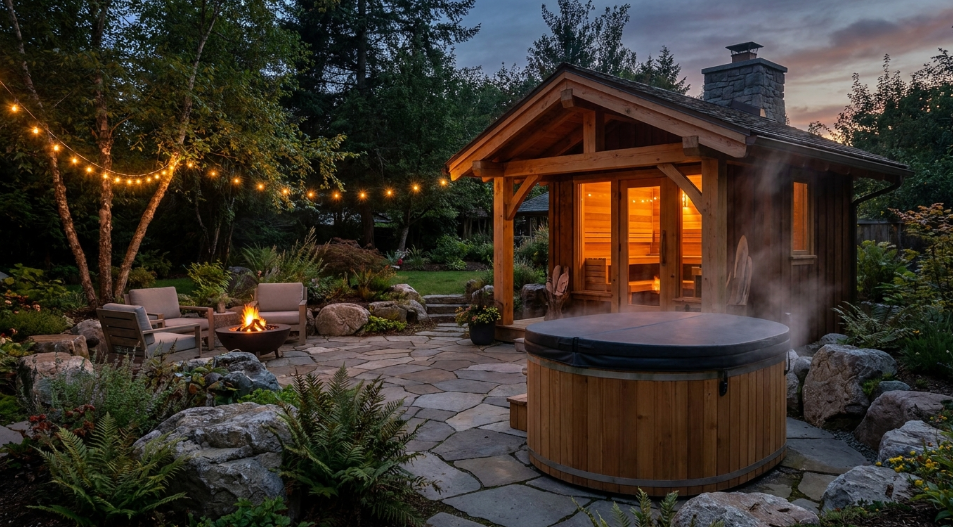
Space planning is the first practical hurdle. An infrared cabin and a plunge tub together need enough clearance for both units plus a walkway between them, ideally somewhere with a floor drain or at least a slip-resistant surface, since you will be moving between hot and wet repeatedly. A covered patio or finished basement corner both work; direct outdoor placement works too in most climates as long as the cabin is rated for it.
Budgeting matters just as much as layout. A quality plunge tub with a chiller can cost as much as or more than the infrared cabin itself, so it helps to price both sides of the setup together rather than buying the sauna first and treating the cold side as an afterthought. For anyone comparing infrared cabin sizes, heater wattage, and price points before committing to a footprint, the SweatDecks saunas collection is one of several specialty retailers worth checking alongside local dealers and general home improvement stores.
Anyone with a diagnosed heart condition, uncontrolled high blood pressure, a recent cardiac event, or who is pregnant should treat contrast therapy as something to discuss with a clinician first rather than something to start from a blog post. The blood pressure and heart rate swings from alternating heat and cold are larger and faster than either exposure alone. Alcohol before or during a session is a bad combination with either heat or cold, and it gets worse when you add both.
Starting slow is the practical answer for most healthy adults. One round instead of three, a shorter cold dip, and paying attention to how you feel the next day all matter more than following someone else’s exact protocol from the internet.
Most home routines start with heat, since it is easier to raise core temperature gradually than to warm up from a cold start. A typical order is one or two rounds of infrared heat followed by a short cold immersion, then a rest period. Ending on cold or ending on warm both have advocates, and neither order is backed by strong evidence.
A common home pattern is 15 to 20 minutes in an infrared cabin followed by 1 to 3 minutes in cold water, repeated for two to three rounds. Beginners often do better starting with a single round and a shorter cold exposure, then adding time once they know how their body responds.
Not the cardiovascular benefits associated with heat exposure, but cold immersion has its own separate effect profile. If the goal is muscle growth after a strength workout, some trials suggest cold water immersion right afterward may blunt those adaptations, so timing it away from lifting days is a reasonable approach.
Both heat and cold exposure place real, if different, demands on the cardiovascular system, and combining them is a bigger swing than either alone. Anyone with a heart condition, uncontrolled blood pressure, or a recent cardiac event should get individual clearance before starting rather than relying on general guidance.
